

Hip Flexor Strength for Runners: Why Stretching Isn’t Always the Answer

Tightness at the front of the hip is one of the most common things runners mention to me as a physiotherapist. The standard reflex runners (and most individuals) have is almost always the same: “I need to stretch this out more”. The trouble is, for a lot of runners, stretching never quite solves it. In this blog post, I’ll explain why stretching isn’t always the answer and what to do instead.
What Your Hip Flexors Actually Do When You Run
Your hip flexors are the muscles at the front of your hip that lift your thigh toward your body and also allow you to bend at the waist. The main player is the iliopsoas muscle, which is the combination of the psoas and iliacus muscles. They sit deep in the front of the hip and are especially active when the hip is bent past 90 degrees. I’ve circled the many hip flexor muscles in red on the image below.
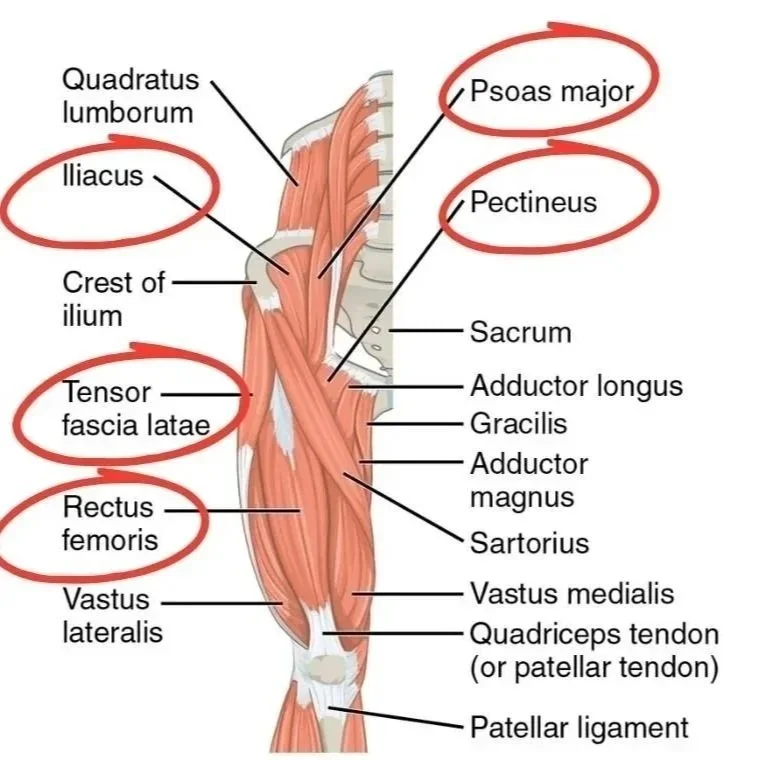
“Gluteal Muscles that Move the Femur" by OpenStax College, via Wikimedia Commons, licensed under CC BY 3.0. Modified from the original.
In running, the hip flexors drive the swing phase (Silva et al., 2018). The moment your foot leaves the ground behind you, your hip flexors fire to accelerate that leg forward and reposition it for the next foot strike. The faster you run, the more they have to work. Late in a long run, when they fatigue, you might feel it as a heavy, tight, or aching front of the hip. This is when a lot of runners feel like they need to stretch it out after a run.
Why 'Tight' Doesn’t Always Mean 'Stretch'
A muscle can feel tight for more than one reason. Yes, sometimes it’s genuinely short and lacks flexibility. If you came to the clinic for a physiotherapy assessment, we’d look at flexibility and strength. But often, particularly in runners, that tight sensation is a muscle that’s working hard without the capacity to match the demand. It is overworked, not over-shortened.
Stretching an under-conditioned muscle can feel good for a few minutes; I’m certainly not going to discredit that. But it doesn’t build the strength the muscle is actually missing, so the tightness tends to return. Building strength through the full range, especially the deep, top-of-the-stride positions that most training ignores, gives the muscle what it’s asking for. That is the gap these four exercises I’ll show you in a bit are designed to fill.
The Four Exercises
Before you get overwhelmed, let me reassure you by saying you don’t need to do all of them. Pick one or two and work them into the strength training sessions you’re already doing.
1) Banded hip flexion in a plank
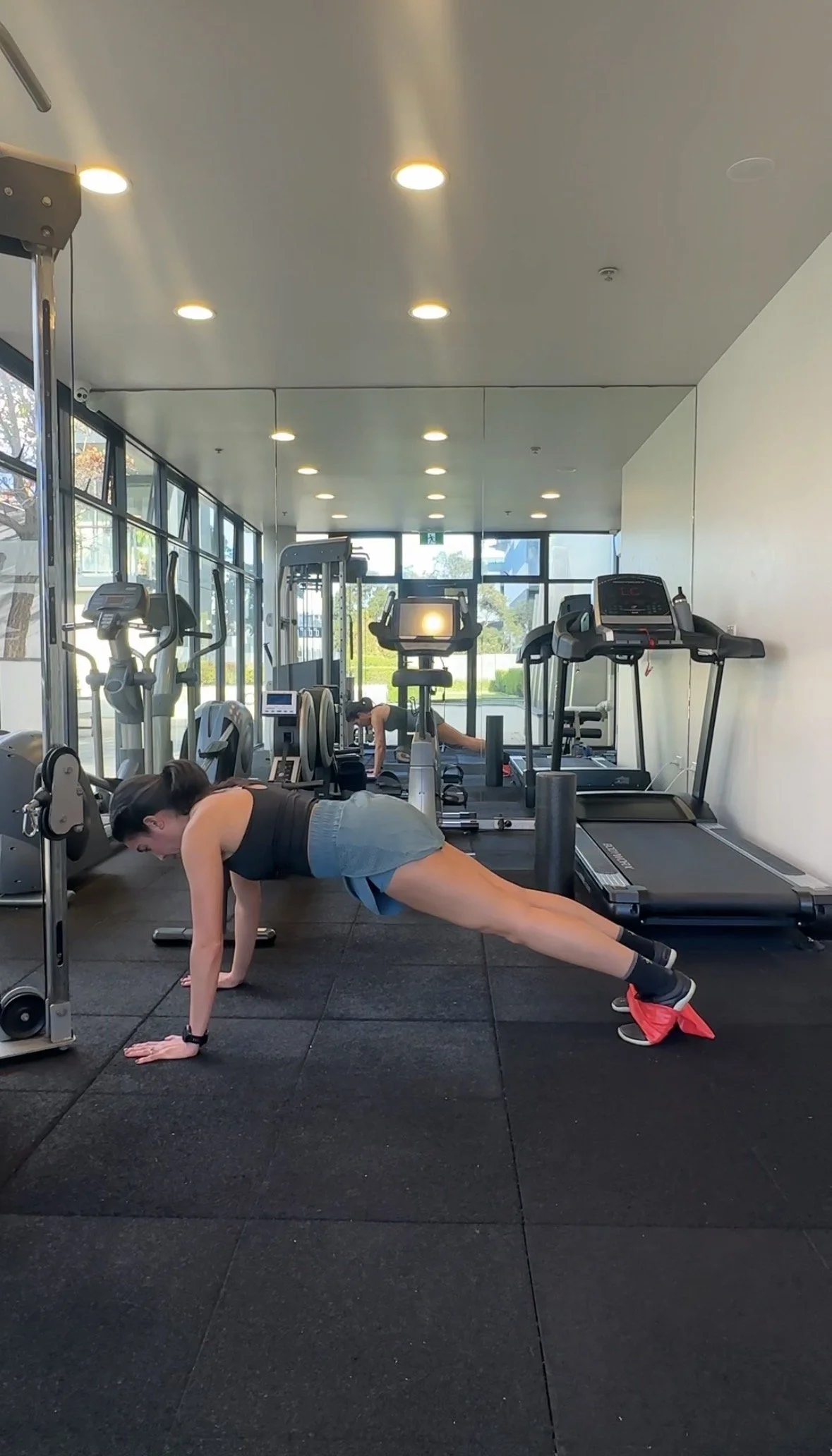
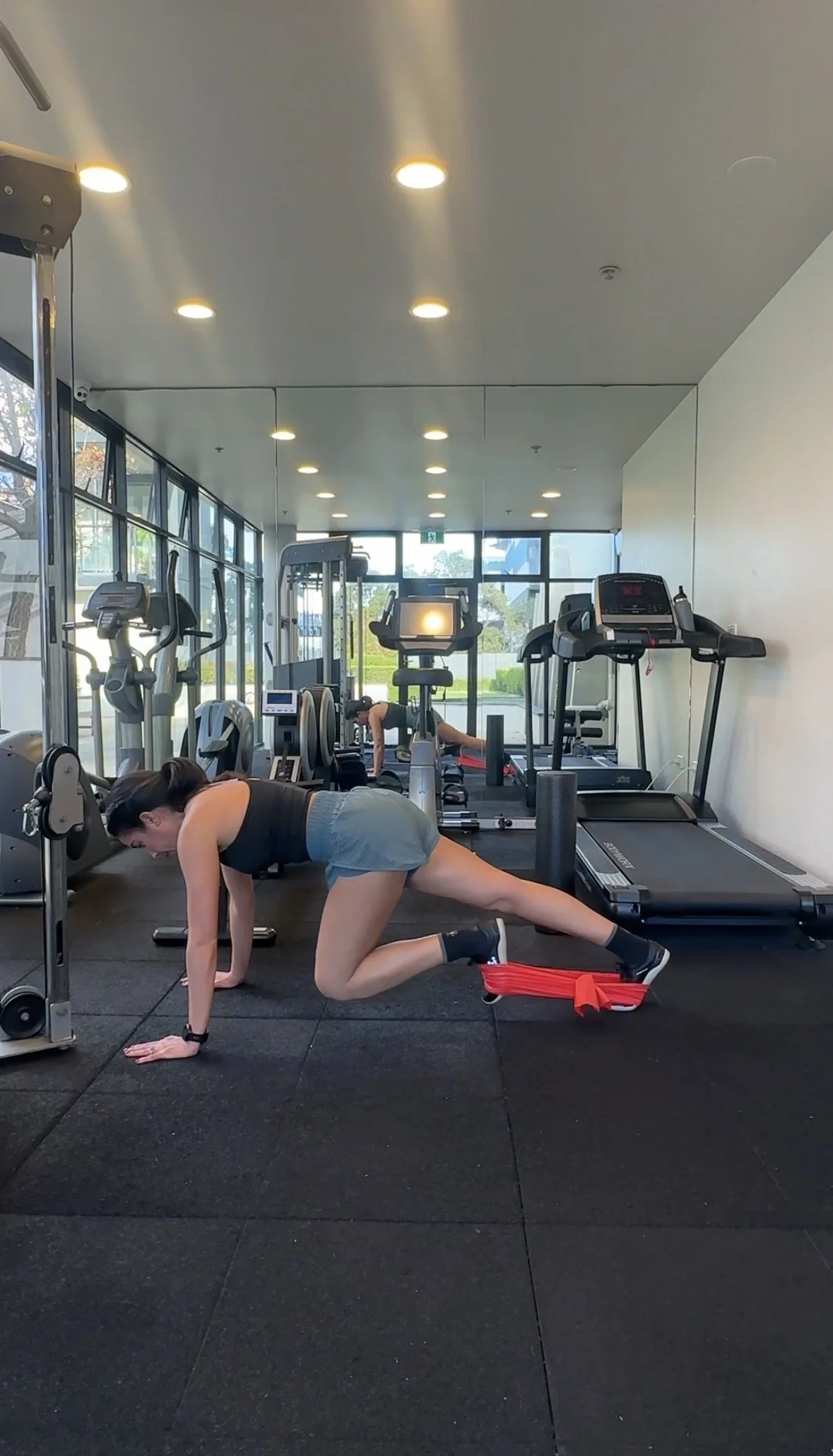
How to do it:
Start from a forearm or high plank with a band looped around your feet.
Drive one knee toward your chest against the resistance, then control it back.
Keep going, alternating each leg.
Be mindful to keep the hips level as much as you can.
Goal: It trains the hip flexors to drive the leg through while your core holds your trunk steady, the same combination your body relies on with every running stride.
2) Kneeling end range hip flexion
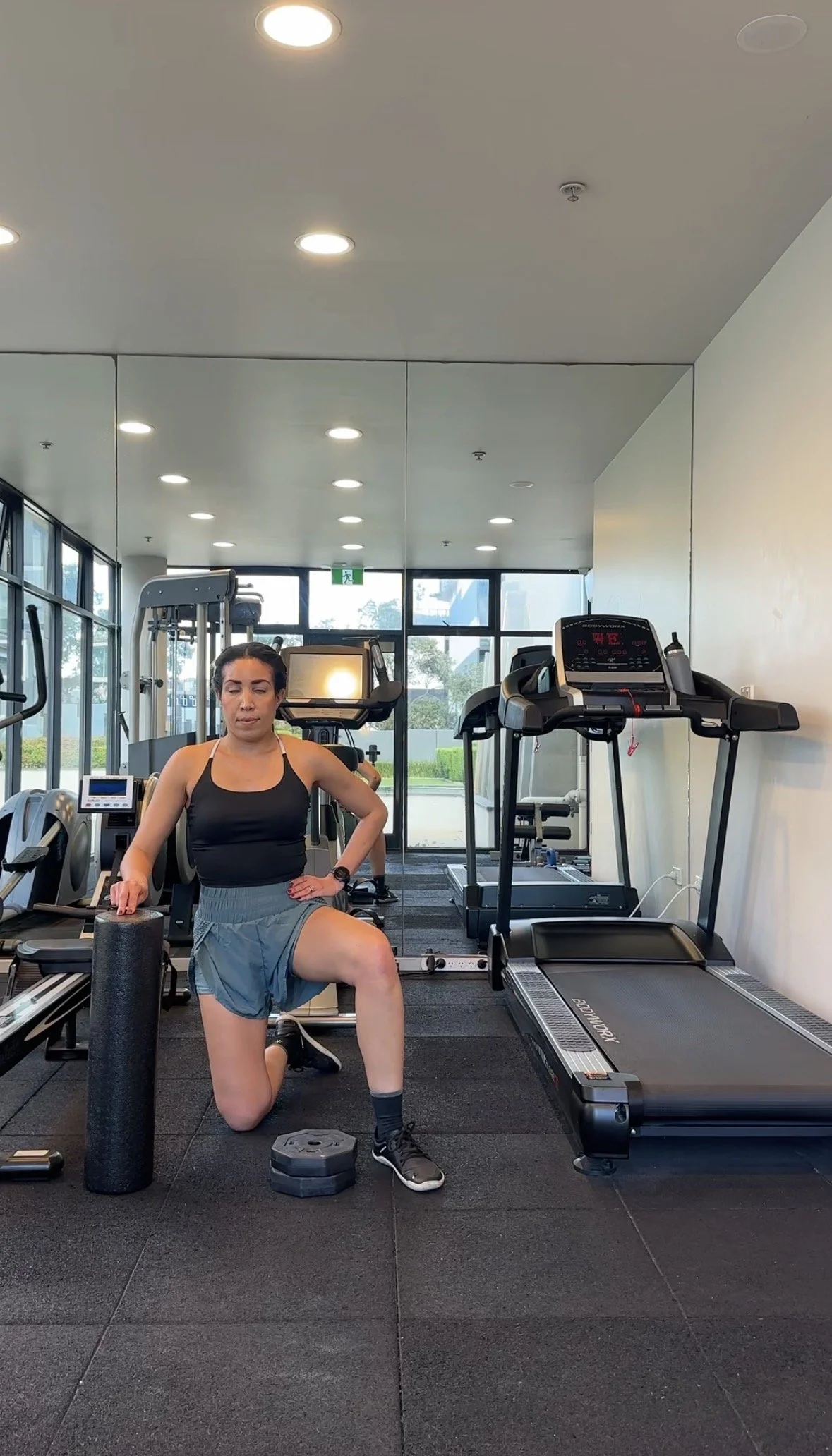
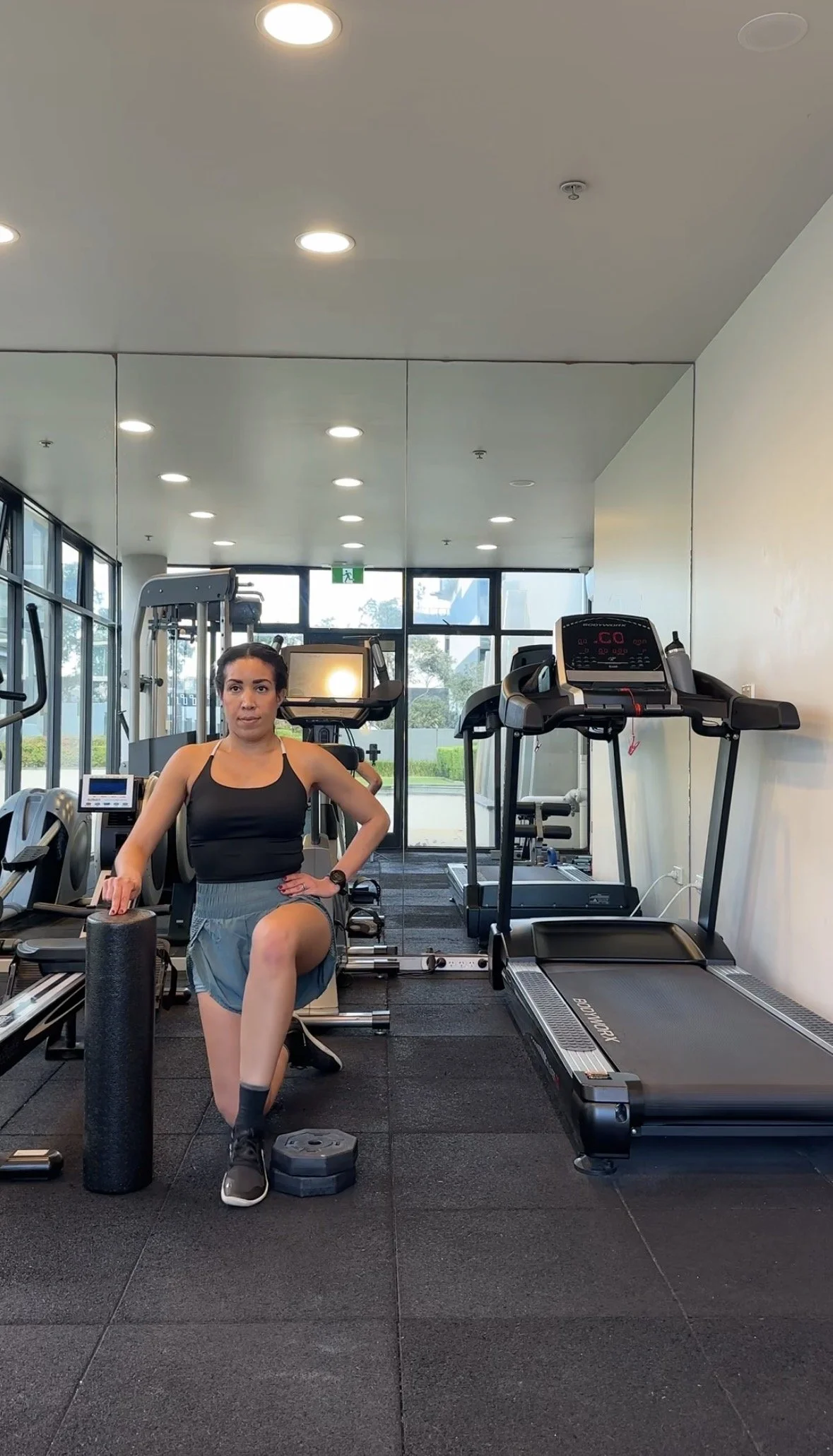
How to do it:
Begin from a half-kneeling position. I recommend having an object near you to maintain balance, as the goal here is strength.
Place a small obstacle (dumbbell or block) near your foot that you are going to lift.
Actively lift the knee that isn’t on the ground as high as you can into flexion so the foot can clear the object on the floor.
Keep going back and forth over the obstacle.
The movement should come from your hip; try to refrain from any movements from the trunk.
Goal: This targets the deep, end-range position that the iliopsoas controls, which most regular training rarely works. You can always add an ankle weight as it gets easier.
3) Standing kettlebell hip flexion
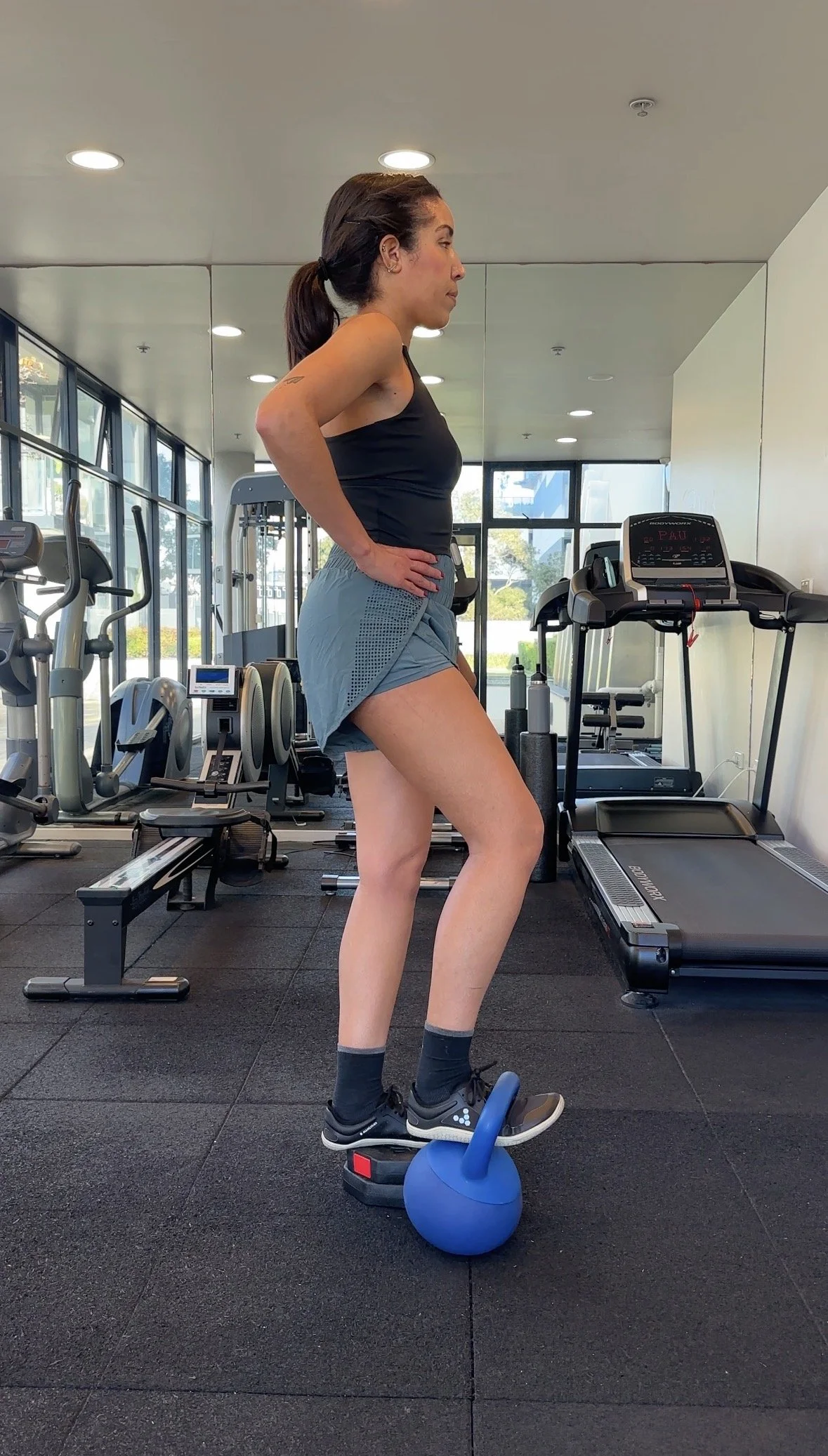
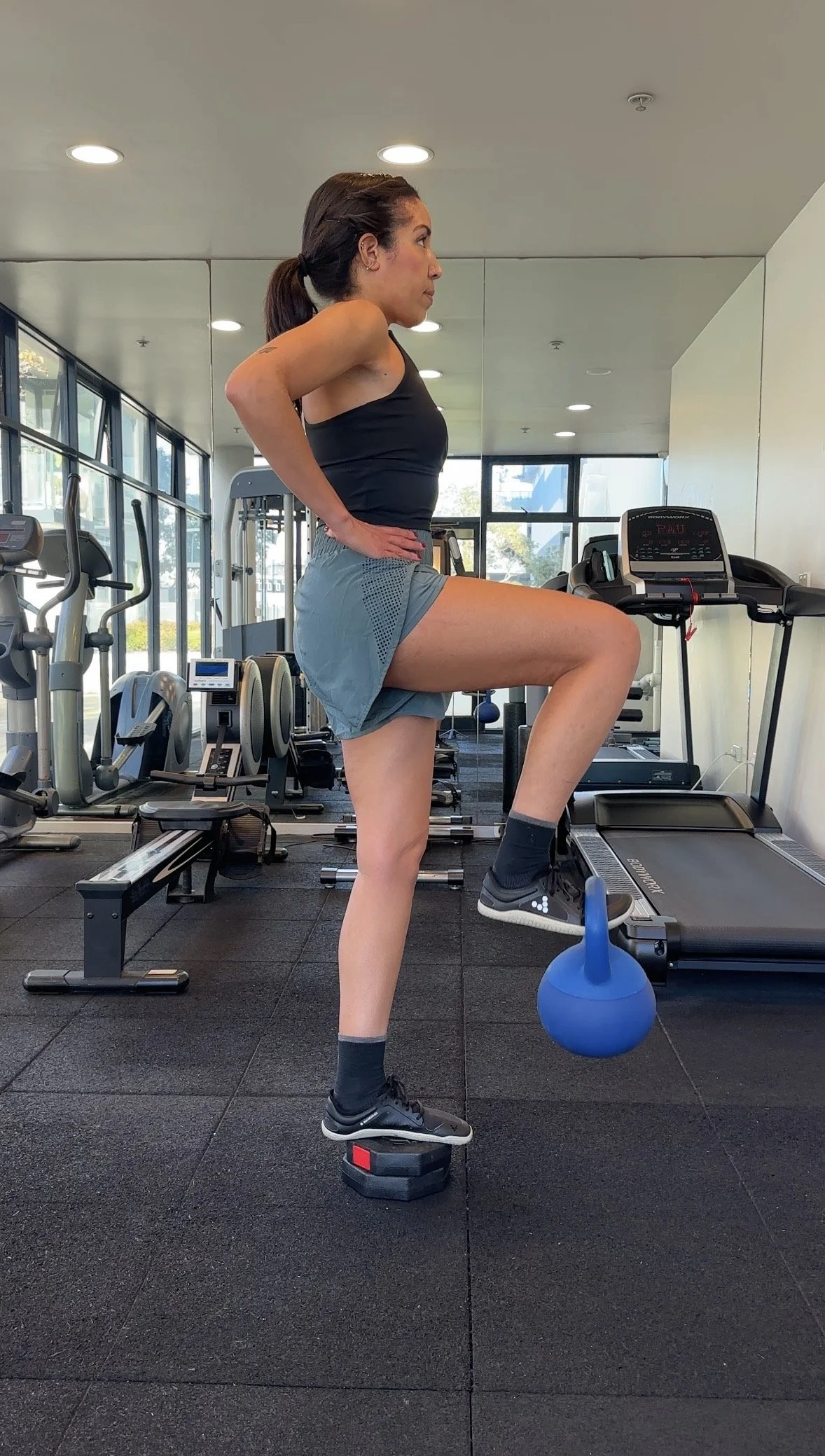
How to do it:
Stand tall with one foot on an elevated surface (I used a few flat weights here). This is so the working leg can move through a full range of motion.
Place the handle of the kettlebell on top of your working foot.
Drive your working knee up to at least hip height against the kettlebell, then lower with control.
Goal: Training the hip flexors upright keeps them close to the position you actually run in. This one also challenges your balance a bit more, so feel free to start with lightly holding onto something if it’s too challenging.
4) Elevated bridge with hip flexion
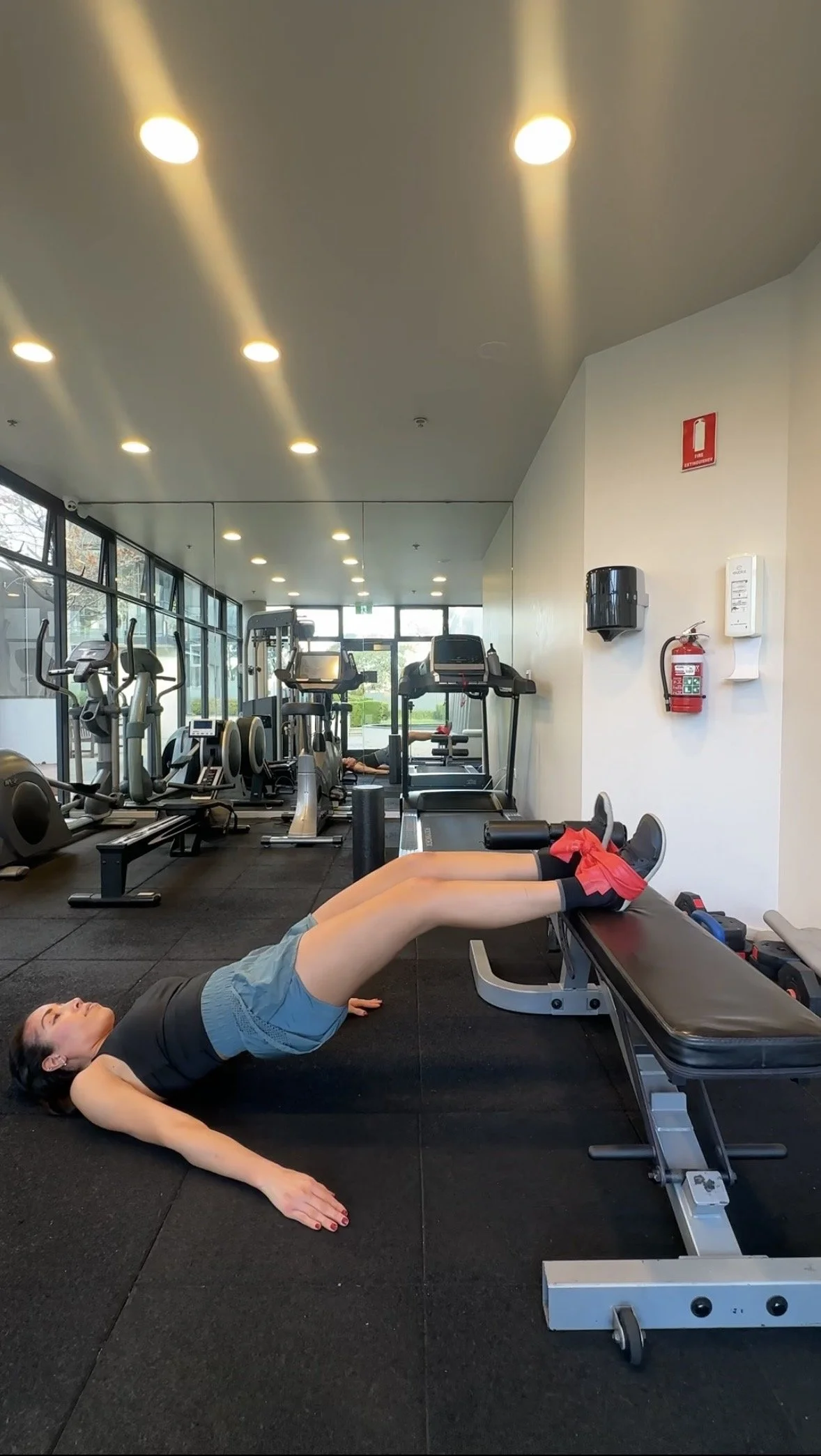
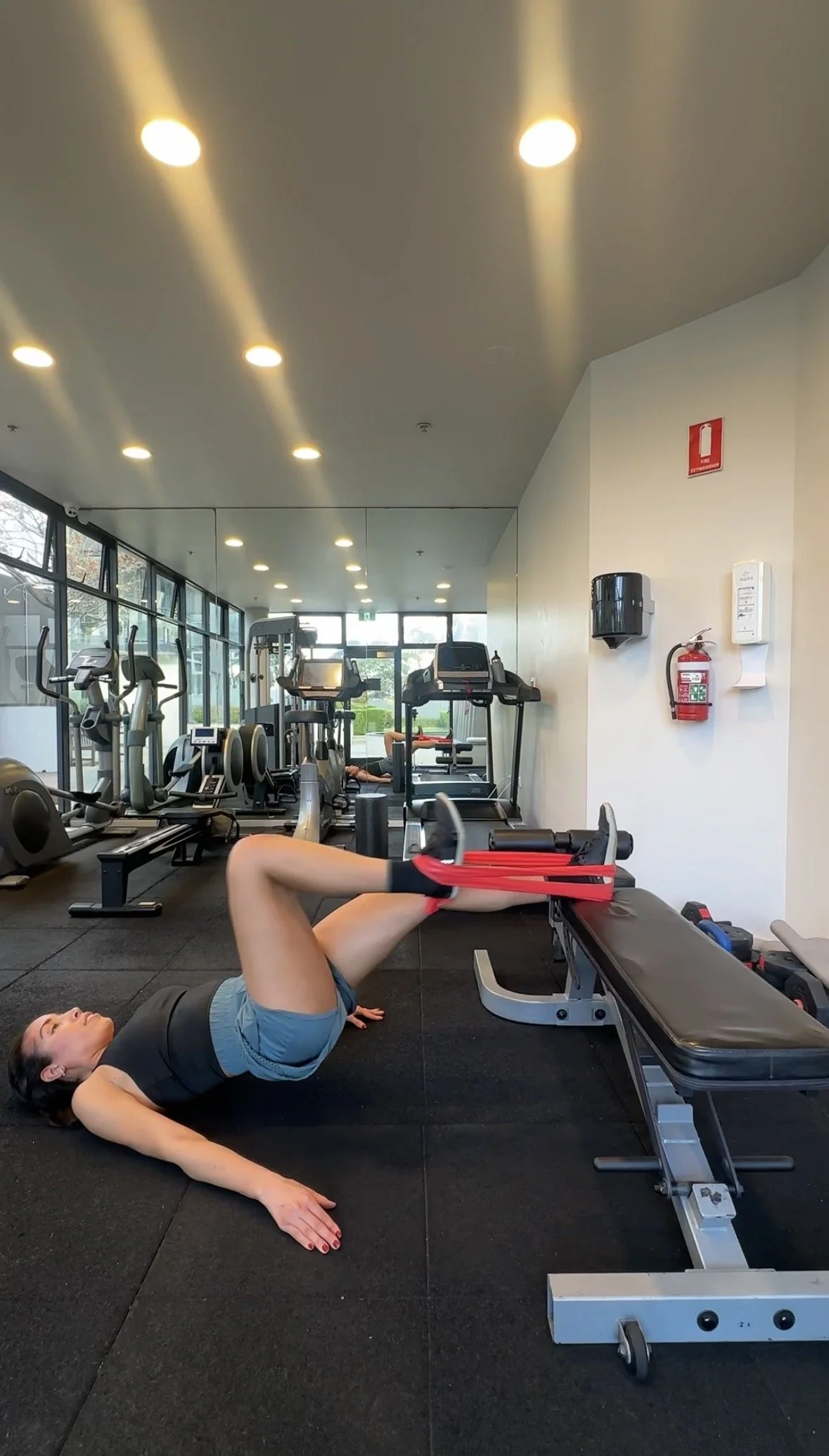
How to do it:
Set up in an elevated bridge position with your feet on a chair or bench, and a band around your feet.
Then, lift your hips and keep them level throughout the exercise, as much as possible.
Start drawing one knee in toward your chest about 90 degrees.
Return slowly to the starting position and keep alternating legs.
Goal: Your hip flexors work on one side while the glute and hamstring stabilise on the other, the same contralateral pattern your body uses every single stride.
There's also research behind why these are set up this way. A 2024 review of muscle-activation studies found the iliopsoas, your deepest hip flexor, works harder when you actively lift your leg toward your body than when you curl your trunk toward your legs, like in a sit-up. Plus, activation rises further with more hip flexion range and with added load (Juan et al., 2024).
Every exercise here is built around actively moving the leg, which is what makes them well-suited to targeting the main hip flexor muscle (iliopsoas).
Watch the Strengthening for Hip Flexors Exercises reel here:
How to Fit Them in
This doesn’t need to be a new workout. You can include some of them in your existing strength day and keep them in your library of exercises. I would suggest having at least one hip flexor strength exercise in your week.
For each exercise, I'd aim for around 3 sets of 8 to 12 reps. The number itself matters less than the effort: take each set close to the point where you'd only manage one to three more reps with good form. That's enough to build real strength and capacity in the muscle without grinding to failure.
The American College of Sports Medicine (ACSM)'s updated resistance training guidelines reinforce this, that training close to fatigue is what drives the adaptation (Currier et al., 2026). This means that if 12 reps still feel easy, add a little load or range rather than just piling on more reps.
When It’s Worth Getting Looked at
Most front-of-hip tightness in runners responds well to the right strength work. That said, if your hip pain is sharp, lingers well beyond the usual post-run tightness, or is getting worse, it’s worth having it assessed properly by a qualified professional rather than pushing through. Wherever you're based, a physiotherapist can watch how you move and build a plan around your hips.
If you’re in Melbourne and want a hand working out what is going on, you can book a free 10-minute discovery call or an appointment at Shape Physio Melbourne. Get in touch.
Not ready to book, or running somewhere further afield? You can still take this further. Download my free Runner's Guide to Strength Training for more on building a body that holds up through consistent running, and join the newsletter for evidence-based training tips made for runners.
References:
Currier, B. S., D'Souza, A. C., Singh, M. A. F., Lowisz, C. V., Rawson, E. S., Schoenfeld, B. J., Smith-Ryan, A. E., Steen, J. P., Thomas, G. A., Triplett, N. T., Washington, T. A., Werner, T. J., & Phillips, S. M. (2026). American College of Sports Medicine Position Stand. Resistance Training Prescription for Muscle Function, Hypertrophy, and Physical Performance in Healthy Adults: An Overview of Reviews. Medicine and science in sports and exercise, 58(4), 851–872. https://doi.org/10.1249/MSS.0000000000003897
Juan, J., Leff, G., Kevorken, K., & Jeanfavre, M. (2024). Hip Flexor Muscle Activation During Common Rehabilitation and Strength Exercises. Journal of clinical medicine, 13(21), 6617. https://doi.org/10.3390/jcm13216617
Silva, W. A., de Lira, C. A. B., Vancini, R. L., & Andrade, M. S. (2018). Hip muscular strength balance is associated with running economy in recreationally-trained endurance runners. PeerJ, 6, e5219. https://doi.org/10.7717/peerj.5219